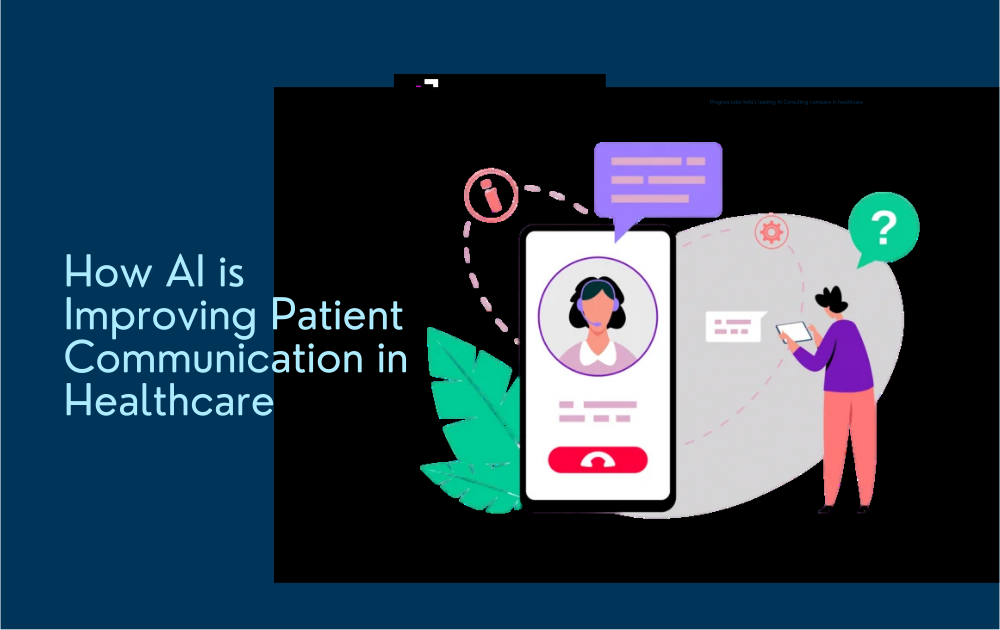
AI is transforming healthcare communication by enabling providers to maintain continuous, personalized contact with patients 24/7 through intelligent chatbots and automated messaging systems. Securely managing patient data and queries in real-time, this shift addresses a major gap in modern healthcare: the lack of proactive engagement between appointments. The result is a significant reduction in readmissions and improved patient satisfaction.
The Gap in Patient-Provider Communication
Most clinics and hospitals struggle to maintain contact with patients. You visit your doctor, get treated, and then hear nothing until a generic reminder for your next appointment.
Research indicates that about 40% of patients report dissatisfaction with their healthcare communication. They often feel left in the dark during recovery, unsure of when to follow up or whom to call if issues arise. This lack of engagement drives missed follow-ups, poor medication adherence, higher readmission rates, and patient abandonment.
Add language barriers in diverse areas, and the problem multiplies. Translation services are expensive, inconsistent, and often unavailable. Most healthcare facilities are still relying on manual follow-ups, inefficient scheduling, and zero personalization, which costs money in preventable complications and lost patients.
4 Ways AI is Transforming Healthcare Communication
1. 24/7 Personalized AI Communication
AI chatbots and messaging systems engage with patients round-the-clock—answering basic questions, providing post-operative guidance, checking medication adherence, and escalating serious concerns to medical staff.
Unlike older automated systems, these are deeply personalized.
They remember medical histories, conditions, and medications.
A knee surgery patient receives specific physical therapy reminders based on their recovery timeline, while a diabetic patient gets personalized glucose monitoring alerts. This constant, low-friction communication keeps patients engaged and creates accountability, which studies show can reduce hospital readmissions by 10-15%.
2. Breaking Down Language Barriers with NLP
Natural Language Processing (NLP) provides real-time translation that goes beyond simply converting words. Modern AI understands medical terminology and cultural context, translating complex health instructions into simple language.
A patient who speaks hindi receives AI-assisted communication in their preferred language, with medical jargon simplified so they truly understand their treatment plan. Patients who receive care in their preferred language consistently experience better health outcomes and higher medication adherence.
3. Tailored Pre- and Post-Op Messaging
Pre-operative anxiety is high, yet most surgical centers only send a generic information packet. AI enables thoughtful, tailored communication journeys.
Before surgery, patients receive:
Customized preparation instructions for their specific procedure.
Educational videos on what to expect.
Reassurance based on individual concerns.
Clarification of submitted questions (with clinical flags for the surgical team).
After surgery, communication includes:
Daily check-ins on pain levels, wound healing, and medication.
Immediate escalation to staff if symptoms are concerning.
Personalized physical therapy schedules with reminders.
Nutritional guidance tailored to recovery.
Patients who feel supported throughout their journey have fewer complications, faster recovery times, and are more likely to return or refer friends.
4. Eliminating Operational Inefficiency
AI fixes the broken internal communication that plagues healthcare organizations. Currently, patient charts, communication notes, and scheduling are fragmented, forcing nurses to hunt for information and doctors to drown in admin work.
AI creates unified systems where:
Patient information flows seamlessly across departments.
Scheduling becomes intelligent, sending proactive reminders and finding optimal times based on doctor availability.
Internal communication is streamlined for faster specialist consultations and clear escalation paths.
Administrative burdens decrease, freeing staff to focus on patient care.
Key Applications of AI in Healthcare Communication
Smart Appointment Scheduling: AI analyzes historical no-show data and patient preferences to send reminders when patients are most likely to act on them, even offering alternative time slots without human intervention.
Lead Conversion Systems: Clinics that respond instantly to prospective patients win. AI chatbots instantly respond to inquiries, qualify leads, and schedule consultations, outperforming clinics that take hours to reply.
AI Clinical Scribes: AI listens to patient-doctor conversations and automatically generates clinical notes, freeing doctors from the screen to focus entirely on the patient.
Multilingual Support Agents: A single AI agent can provide real-time patient support in 30+ languages for scheduling, post-op instructions, or general questions.
Personal AI Nurses: Post-discharge, patients have access to an AI advisor to answer routine questions ("Is this swelling normal?") based on trained medical knowledge, instantly routing complex issues to human nurses.
The Impact on Patient Satisfaction and Health Outcomes
Healthcare providers using intelligent patient communication platforms report impressive metrics:
20-30% improvement in patient satisfaction scores.
15% reduction in ER visits among chronic condition patients.
12% improvement in medication adherence.
25% faster appointment scheduling with no-show rates dropping to 5-10%.
40% reduction in routine inquiries to clinical staff.
Beyond the numbers, patients recovering from surgery feel less anxious, diabetic patients manage their conditions better, and families of elderly patients gain peace of mind. By reducing preventable readmissions by 10-15%, hospitals save millions while delivering better care.
How MednodeAI Automates Patient Interactions
A common concern with automation is whether it will feel "cold." Platforms like MednodeAI are designed to handle routine tasks so human professionals can focus on interactions requiring empathy and clinical judgment.
MednodeAI handles high-volume interactions: appointment reminders, post-op instructions, basic health queries, and symptom screening. It features intelligent escalation—if a patient experiences concerning symptoms or asks a complex medical question, the AI immediately connects them with a nurse or doctor.
Healthcare teams report having more time for meaningful interactions because the AI handles the routine work. Crucially, these systems are purpose-built for healthcare, ensuring strict HIPAA compliance, encryption, and secure patient data management.
Need Help Navigating Healthcare AI?
Implementing AI communication requires figuring out the right platform, managing staff training, and understanding true ROI. This is where healthcare technology consulting experts come in.
Prognos Labs specializes in auditing current patient communication infrastructure and designing customized AI strategies. We help clinics and hospital systems:
Assess communication gaps costing money and satisfaction.
Evaluate AI platforms against specific operational needs.
Plan smooth implementations that build staff confidence.
Measure outcomes to ensure ROI.
Implementation needs to be thoughtful, safe, and aligned with your culture. A healthcare AI audit takes just a few hours and provides a clear roadmap for your organization.
Schedule a Healthcare AI Communication Audit with Prognos Labs
Frequently Asked Questions (FAQ)
Is AI patient communication HIPAA compliant?
Yes, but not automatically. Any AI platform handling patient data must be built with HIPAA compliance as a core design principle—including encryption, access controls, and audit logs. Always verify that a vendor has the required security certifications.
Will patients prefer AI communication to talking with their doctor?
No, and that is not the goal. Patients prefer AI to waiting on hold or struggling to get a callback at 2 AM. The goal is to use AI for routine communication so providers can dedicate their time to interactions requiring human judgment and empathy.
How much does it cost to implement an AI communication system?
Costs vary based on organization size and workflow complexity, ranging from a few thousand a month for small clinics to six figures annually for hospital systems. However, most organizations find the system pays for itself within 6-12 months through operational efficiency, reduced no-shows, and fewer readmissions.
Can AI handle complex patient interactions?
No. AI excels at symptom screening and escalating concerns. Complex clinical decisions, treatment discussions, and emotional support strictly require human healthcare providers. AI acts as a smart triage system, not a clinical replacement.
What if a patient doesn't want to interact with AI?
Reputable systems always provide human contact options. While acceptance typically increases as patients experience faster responses and 24/7 availability, interacting with AI should always remain optional.